DRDryersd80d90d95
LG dryer d80, d90 and d95: restoring airflow through the whole duct run
SymptomClothes take two or three cycles to dry, the drum smells hot, and d80, d90 or d95 appears near the end of the cycle.
2026.07.19
SafetyUnplug the dryer and, on gas models, close the gas tap before pulling the machine out. Lint is combustible: never clear a duct with the machine running.
Most error codes describe a component that failed. These three describe a percentage: the dryer’s own estimate of how much of the exhaust path is blocked, based on how long the outlet thermistor takes to reach temperature.
What the numbers mean
- d80
- ≈ 80 % restricted: clean at next opportunity
- d90
- ≈ 90 % restricted: clean now, drying times doubled
- d95
- ≈ 95 % restricted: stop using; fire risk
The path, in order
Air leaves the drum, passes the lint screen, goes through the blower housing, out of the machine’s rear port, along your ducting, and out through the exterior hood. Any one of those can be the restriction, and people almost always clean the first one and stop.
1. Lint screen, and the slot beneath it
Pull the screen and clear the visible mat. Then hold it up to a light and try pouring a little water through it. If the water beads and sits, the mesh is glazed with fabric-softener residue and is restricting airflow while looking clean. Scrub both sides with warm water and a little washing-up liquid, and rinse until water passes straight through.
Now the part that gets missed: the slot the screen sits in. Vacuum down it with a crevice tool as far as it reaches. A surprising amount of lint bypasses the screen and packs into the bottom of that housing.
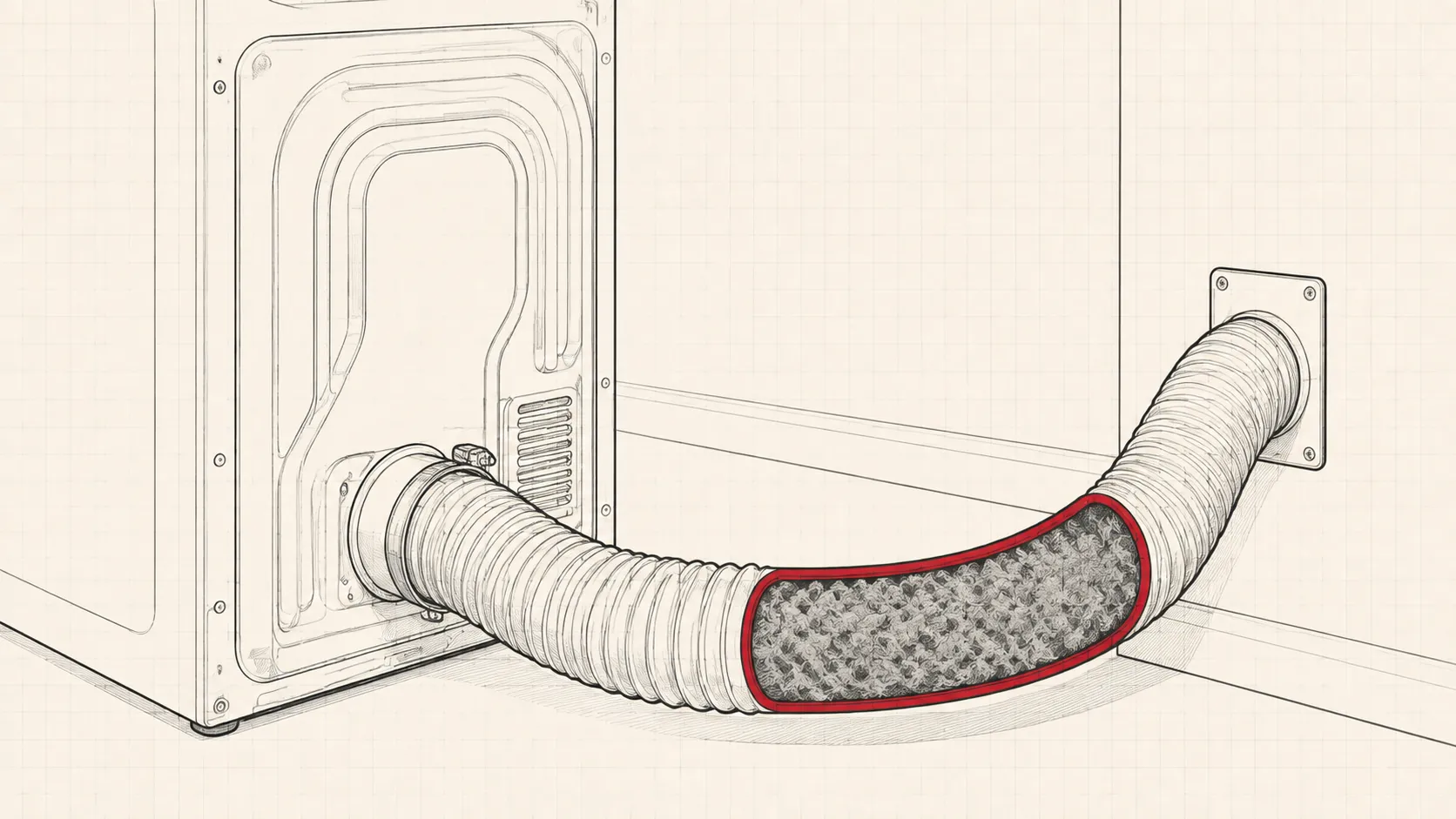
2. The flexible hose behind the machine
Pull the dryer out and disconnect the duct at the machine.
Rules for the duct run:
- As short and straight as possible. Every 90° elbow costs roughly the same airflow as 1.5 m of straight duct.
- Rigid or semi-rigid aluminium only. Never plastic, never vinyl, never cloth-taped joints.
- Foil tape at every joint, no screws. A screw projecting into the duct becomes a lint hook that builds an obstruction from nothing.
- Slope slightly downward toward the outside where the run is horizontal, so condensate drains out rather than pooling.
3. Brush the full run
With both ends disconnected, feed a vent brush through the duct and work it in and out in stages, adding rods as you go. Do it from the outside inward if you can: you want the debris coming out of the exterior opening rather than into the room.
Vacuum the rear port of the dryer itself while you are there. Lint packs into the blower housing over time and it is the one section a duct brush cannot reach.
4. The exterior hood
Go outside and look at the vent. This is where a third of severe restrictions actually live.
- The flap must swing freely and close fully. Painted-shut flaps are extremely common.
- Wire mesh or an insect screen across the outlet must go: it clogs with lint within a season and is not permitted on a dryer vent.
- Birds nest in these. A blocked hood in spring is a genuinely routine finding.
5. Confirm the fix
Reconnect everything, run a 15-minute timed cycle on high heat, and go outside. You want to feel strong warm airflow at the hood, enough to lift a sheet of paper held near it. Weak flow means the restriction is still in the run.
Heat-pump and condenser models
On RC-series heat-pump dryers there is no exterior duct at all, so a duct code points instead at the condenser/heat-exchanger filter behind the lower access flap. Pull it, rinse it under a tap until the fins are visibly clear, and let it dry fully before refitting. That filter needs attention roughly monthly: far more often than owners expect.
Keeping it clear
Clean the lint screen every load, deep-clean the screen mesh every three months, brush the full duct run once a year, and check the exterior flap each spring. If a load of towels ever needs a second cycle, treat that as an early warning: the restriction is already building well before d80 appears.