OVOvens & rangesF9F1F3
LG oven range not reaching temperature: F9, igniter, element and sensor checks
SymptomThe LG oven runs but takes too long to heat, never reaches the set temperature, or displays a heating fault code.
2026.08.02
SafetyDisconnect power at the breaker before accessing electrical parts. Gas burner testing and gas line work are not home repairs, stop and call a qualified technician if the fault involves gas supply, valves, or combustion.
Confirm the heating complaint before replacing parts
Start with the actual symptom. A customer report of a cold oven can come from several different faults. Verify the oven is set to Bake, allow at least 15 minutes of preheat time, and compare the display temperature with a known accurate oven thermometer. A temperature difference of 25 to 50 degrees Fahrenheit can be a calibration issue, but a cavity that stays only warm points to a heating system fault.
Check whether the broil element or burner operates. This separates a control problem from a bake circuit problem. If the oven display works normally but the bake system does not produce heat, continue with the component checks below.
F9 code diagnosis on LG ranges
Treat F9 as a heating failure indication. On many LG oven ranges, F9 appears when the control does not detect the expected temperature rise during heating. The control board itself is rarely the first part to replace. Confirm the heating components first.
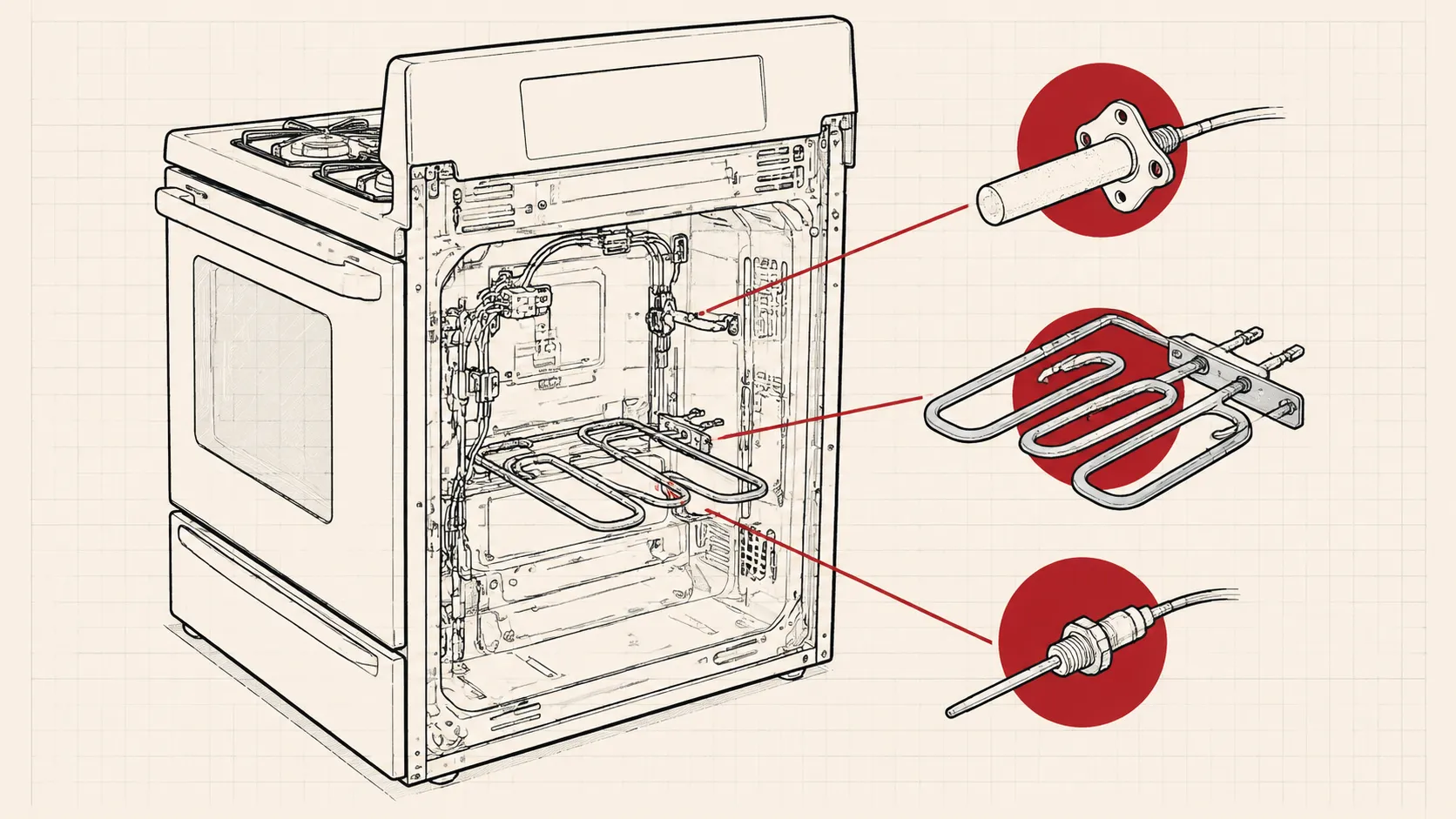
For electric models, inspect the bake element. A failed element often has a visible break, blistered section, or damaged insulation. Remove power and measure resistance across the element terminals. A typical bake element is commonly in the range of 15 to 40 ohms depending on wattage. An open reading means the element is failed.
For gas models, the common cause is a weak bake igniter. The igniter may glow but still fail to draw enough current to open the gas valve. A glowing igniter is not proof that it is good.
Gas model weak igniter test
Measure igniter performance, not appearance. The bake igniter and gas safety valve operate as a matched circuit. When the igniter becomes weak, it may glow orange instead of bright white or yellow white and may never reach the current needed to open the valve.
A qualified technician can check the igniter current draw with a clamp meter. Many flat style igniters operate correctly around 3.2 to 3.6 amps, depending on the exact component specification. If current is low, replace the igniter rather than the gas valve first.
Do not bypass the gas valve or manually open the burner circuit. Gas appliance combustion checks require proper instruments and training. If the fault involves gas pressure, leaks, valve operation, or burner adjustment, the repair limit ends here.
Electric model bake element inspection
Check the element electrically before ordering parts. Turn off the breaker and verify the circuit is dead. Access the bake element terminals, disconnect the wires, and measure resistance through the element itself.
A correct resistance reading confirms only that the element is not open. Also inspect for a grounded element by measuring from each terminal to the metal sheath. Any unwanted continuity to the frame indicates a damaged element.
If the element is correct, check that the control sends power during a heating cycle. This measurement involves live mains voltage and should only be performed by a qualified technician using proper safety procedures.
F1 and F3 temperature sensor checks
Test the oven temperature sensor before replacing the control board. LG ranges commonly use a resistance type temperature sensor. At room temperature, the sensor should read approximately 1080 ohms.
Disconnect power, remove the sensor connector, and measure resistance at the sensor terminals. A reading near 1080 ohms at about 70 degrees Fahrenheit indicates a normal sensor. A very high reading or open circuit indicates a failed sensor. A very low reading indicates a shorted sensor.
Inspect the sensor harness carefully. A damaged wire near the rear wall can create the same symptoms as a failed sensor. Confirm the connector is tight and free from corrosion.
When replacement is the correct decision
Do not replace parts by code alone. A failed igniter, element, or sensor is usually economical to repair. A control board replacement becomes a larger decision because the part cost can approach the value of an older range.
For an older appliance with multiple failures, damaged wiring, poor door seals, or expensive electronic parts, replacement may be the more practical option. Compare the repair cost with the age and condition of the entire range.
Final verification
Complete a full heating test. After repair, run Bake and confirm the oven reaches the set temperature without repeated cycling errors. Verify stable heating, normal burner operation on gas models, and correct temperature sensing before returning the appliance to service.