WMWashing machinesOE
LG washing machine OE error: clearing the drain path end to end
SymptomThe cycle stops with water still in the drum and the display shows OE. The pump may hum without moving water, or stay silent.
2026.07.11
SafetyUnplug the machine at the wall before opening the pump housing. The pump is mains-powered and the filter cavity holds standing water.
OE is not a diagnosis, it is a stopwatch. The control board opens the drain, waits for the pressure sensor to report an empty tub, and raises OE when that report does not arrive inside the drain window, typically five to ten minutes depending on platform. Everything that slows water down produces the same code, which is why the fix is a sequence rather than a guess.
Work the path in the order water travels. Roughly seven OE call-outs in ten stop at the first step.
1. Empty the tub through the emergency drain
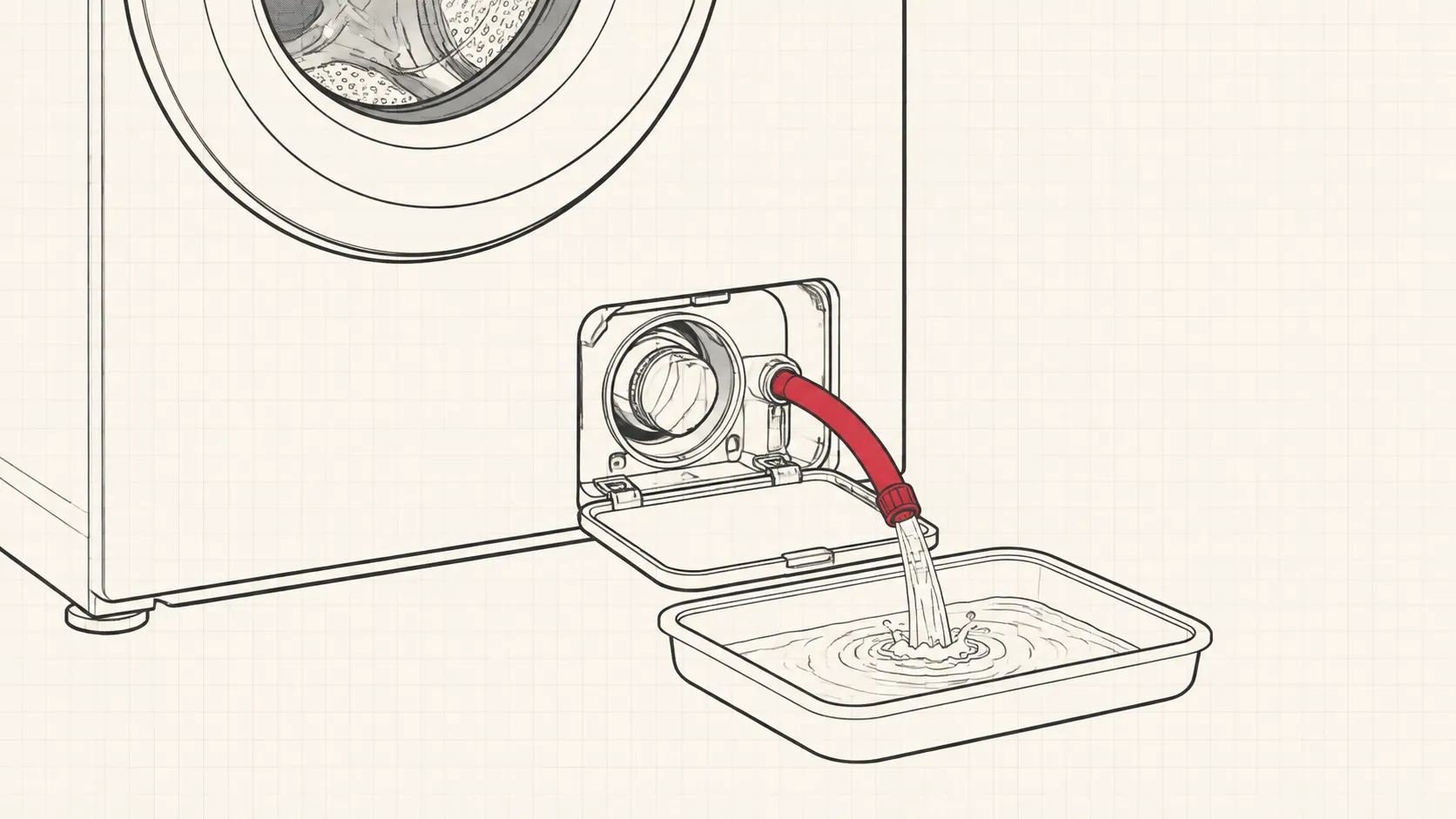
Open the small access flap at the bottom-right of the front panel. Behind it you will find two things: a short rubber tube with a cap, and a large round filter cap.
Pull the rubber tube out, hold it over a tray, and remove its cap. Water comes out slowly and in stages: cap it again when the tray is near full, empty, repeat. On a full tub this takes three or four rounds.
Only when the tube runs dry should you touch the filter cap. Opening it first with a full tub dumps everything at once.
2. Clear the pump filter
Turn the filter cap anticlockwise and withdraw it. The filter is a plastic cage on the end of the cap, and it collects exactly what you would expect: coins, hair grips, buttons, screws, an impressive amount of lint felted into a grey mat.
Rinse it under a tap, then reach into the empty cavity with a torch. You are looking for the pump impeller: a small plastic paddle wheel at the back of the opening.
Refit the cap by hand only, and only after checking the O-ring is seated and undamaged. A pinched O-ring here becomes tomorrow’s leak.
3. Check the drain hose behind the machine
Pull the machine forward far enough to see the corrugated grey hose leaving the back.
Three failures account for almost all of the rest:
- Crush. The hose is squashed between the machine and the wall. Pushing an appliance back into a tight recess is the single most common cause of a first-time OE.
- Kink. The hose loops tightly behind a foot or over the power cable and pinches itself.
- No high loop, or too high a loop. The hose needs to rise to between 60 cm and 100 cm before it drops into the standpipe. Below that, the machine siphons and refills forever. Above it, the pump cannot lift the column.
Disconnect the hose at the wall end, drop it into a bucket, and start a spin-and-drain cycle. Strong, steady flow means the machine is fine and the blockage is in the household waste: a sink trap or a blocked standpipe.
4. The pressure tube: the one everybody misses
If the pump runs, the hose is clear, water leaves the machine, and you still get OE, the machine is draining but does not believe it is.
The water-level sensor sees the tub through a thin, clear tube running from a nipple low on the tub up to the sensor on the side wall. Detergent residue and limescale gradually fill that tube. When it blocks, the sensor holds its last reading and the board concludes the tub never emptied.
Pressure tube check
- Tube inside diameter
- ≈ 5 mm
- Correct routing
- Continuous rise, no dips
- Test
- Blow gently into the sensor end
- Healthy result
- Bubbling audible in the tub
Pull the tube off at the sensor, blow gently through it, and listen at the drum. Bubbling means it is clear. Nothing, or hard resistance, means it is blocked: detach it at both ends, flush it with warm water, and refit it so it rises continuously with no low spot for water to sit in.
5. When the pump is genuinely dead
Replace the pump when the impeller is seized after removing the debris, when the impeller spins with no resistance whatsoever, or when the motor hums without turning. A drain pump is one of the cheapest parts on the machine and one of the easiest to swap, three or four screws and two connectors from the front on most LG front-loaders.
Stopping it coming back
Run a Tub Clean cycle monthly at 60 °C or higher with no laundry in the drum. Check the pump filter every three months: quarterly, not annually, if anyone in the house wears underwired bras or if you wash work clothes. And when you push the machine back to the wall, kneel down and confirm the drain hose has somewhere to live.