WMWashing machinesdEdE1dE2
LG washing machine dE, dE1 and dE2: door lock faults separated
SymptomThe door looks shut but the cycle will not start, or stops part way with dE / dE1 / dE2. Sometimes the door will not release afterwards.
2026.07.14
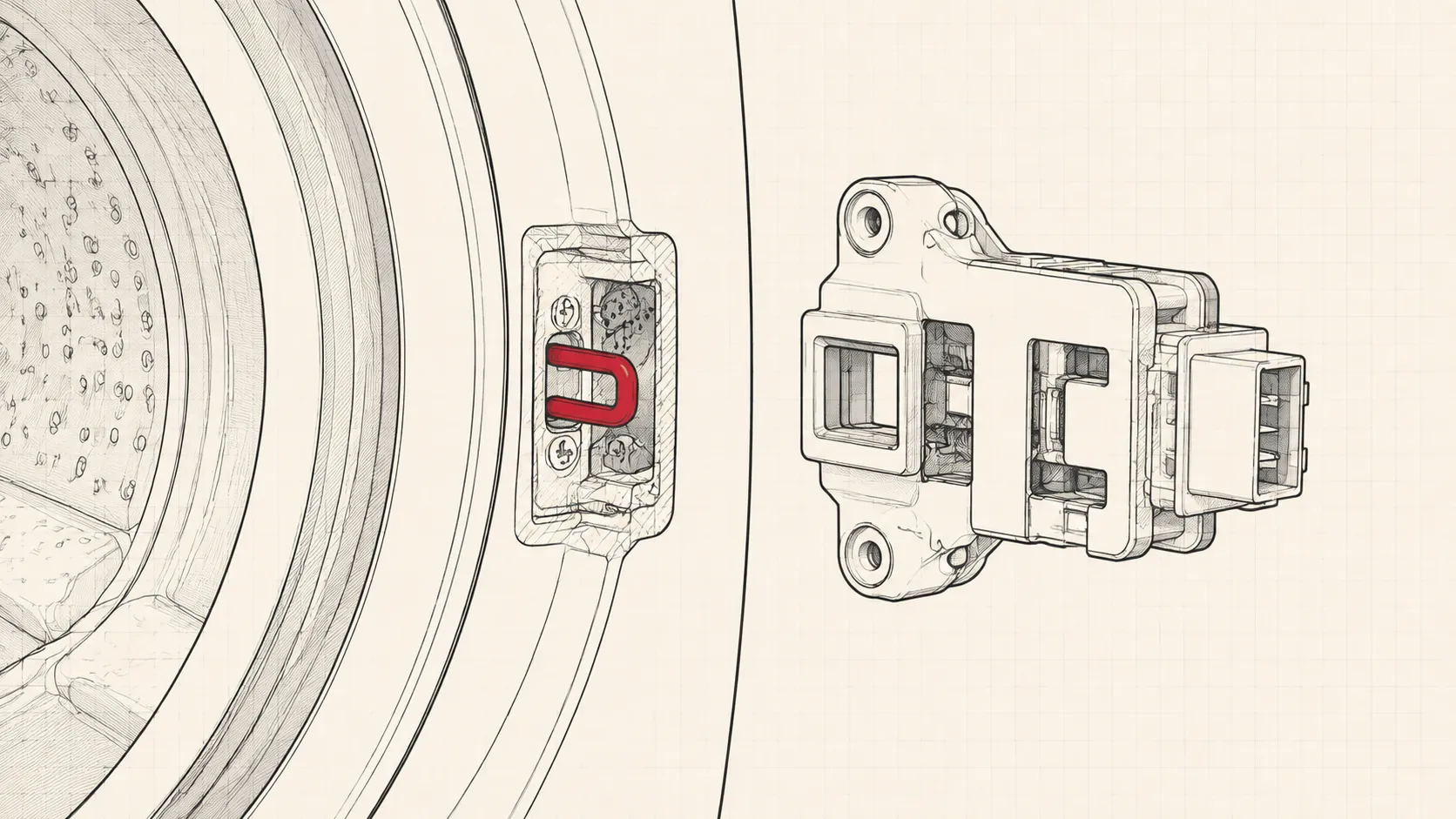
SafetyThe interlock is mains-powered and stays live until the plug is out. Unplug at the wall before removing the door boot clamp.
The three door codes are not interchangeable, and treating them as one code is why people replace working parts.
Which code means what
- dE
- Lock never confirmed before the cycle started
- dE1
- Door reported open during a running cycle
- dE2
- Lock circuit not responding to the control board
First: rule out the free fixes
Two things clear a surprising share of door codes and cost nothing.
Clear the seal. Run a finger all the way round the rubber boot. A sock tail, a bra strap or a corner of a duvet cover trapped between glass and seal is enough to hold the door a millimetre proud, invisible, but well outside the interlock’s tolerance.
Power-cycle properly. Unplug at the wall, wait five minutes, plug back in. The control board latches the fault state; a five-second reset often is not enough to clear it.
dE: the lock never confirmed
The interlock has to physically close and report back before the board will begin filling. If that confirmation never arrives, you get dE.
- Close the door and listen. A healthy interlock gives a firm double click about a second after the door shuts, then a lighter click as the bolt drives home. Silence is diagnostic.
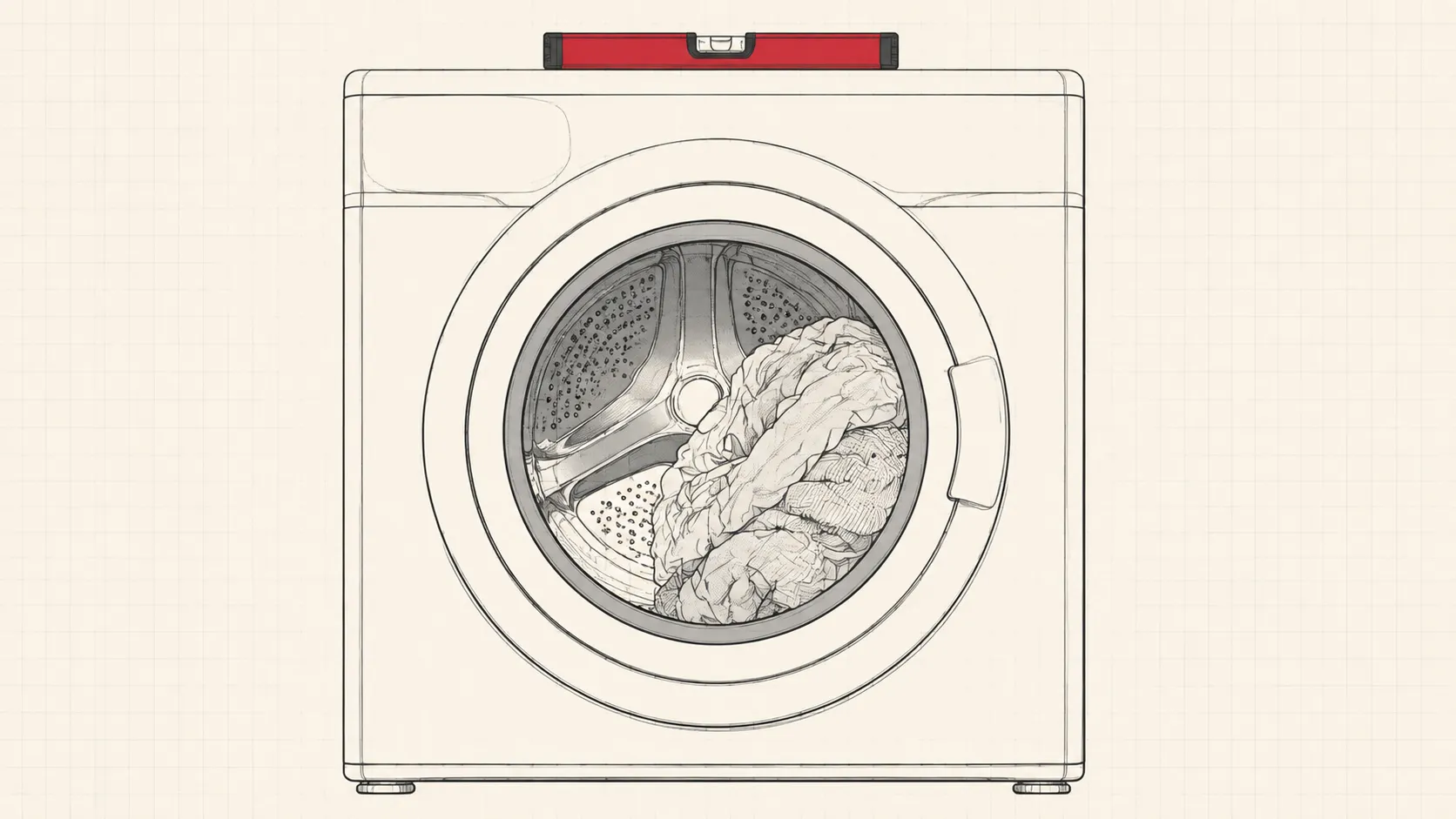
- Check the hinge. Lift the door slightly by the handle while pushing it closed. If it latches when lifted but not when let hang, the hinge has sagged and the latch tongue is entering the lock below centre. That is a hinge or hinge-screw problem, not a lock problem.
- Inspect the latch tongue. Look at the plastic hook on the door. Worn rounded corners, a hairline crack at the root, or a visible bend all stop it seating deep enough to trip the microswitch.
dE1: reported open during a cycle
Here the lock engaged, the cycle started, and then the switch changed state. That points at something intermittent rather than something broken.
Look for:
- A hinge with vertical play. Grip the closed door top and bottom and try to rock it. More than about a millimetre lets drum vibration momentarily unseat the tongue.
- An overfilled drum. Laundry pressing against the glass pushes the door outward once it is wet. If dE1 appears only on heavy loads, that is your answer.
- A tired switch. The microswitch inside the interlock has a finite number of operations. Once contact bounce begins, vibration alone is enough to open the circuit for a few milliseconds, long enough for the board to notice.
If the machine is on its original lock after many years of daily use, the lock is the likely part.
dE2: the lock circuit
dE2 says the board is not getting the electrical response it expects. This is the only one of the three that regularly ends in a part.
To reach the lock: open the door, prise the outer spring clamp off the front of the rubber boot with a flat screwdriver, peel the boot lip back off the front panel at the lock side, and the lock body is exposed with two Torx screws holding it to the panel.
With the connector unplugged, inspect it before you measure anything. Browned plastic, a melted pin, or a green bloom on the terminals is a decision in itself, replace the lock and clean or replace the connector housing, because a bad connection here generates the heat that destroys the next lock too.
Measure across the switch pins with the door closed and again with it open. You want a clear change of state. No change in either position means the lock has failed internally.
Getting a stuck door open
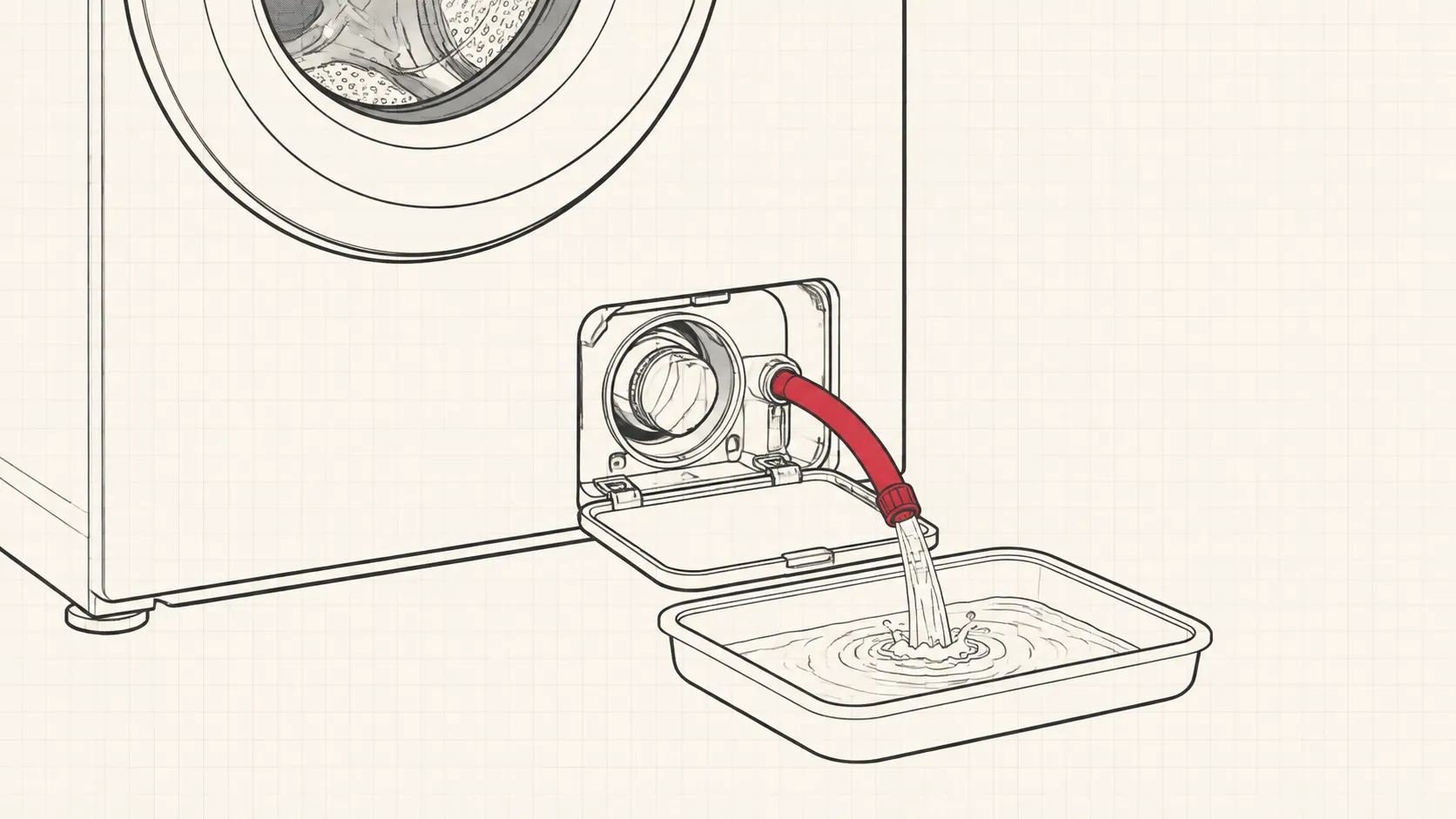
If there is a fault and the door will not release, do not lever it. Unplug the machine and leave it two minutes: many locks release when the PTC element cools. If it stays shut, drain the tub through the emergency tube behind the bottom flap first, with the water out, the bimetal releases on most platforms.
The manual release is a small tab or cord inside the pump-filter cavity on some models; where it exists it is documented in the model’s own manual, and pulling anything else in there breaks it.
Preventing repeat failures
Do not use the door as a handle to move the machine, do not hang wet washing on an open door, and give the seal a wipe when you clean the filter. The hinge carries the whole door weight on two small screws into a plastic panel, most door faults trace back to that joint being asked to do more than it should.