Maintenance/Washing machines
You are using too much detergent, and the machine is telling you
Overdosing does not clean better. It produces foam that fakes an unbalanced load, residue that blocks the pressure tube, and a film that keeps the door seal permanently damp.
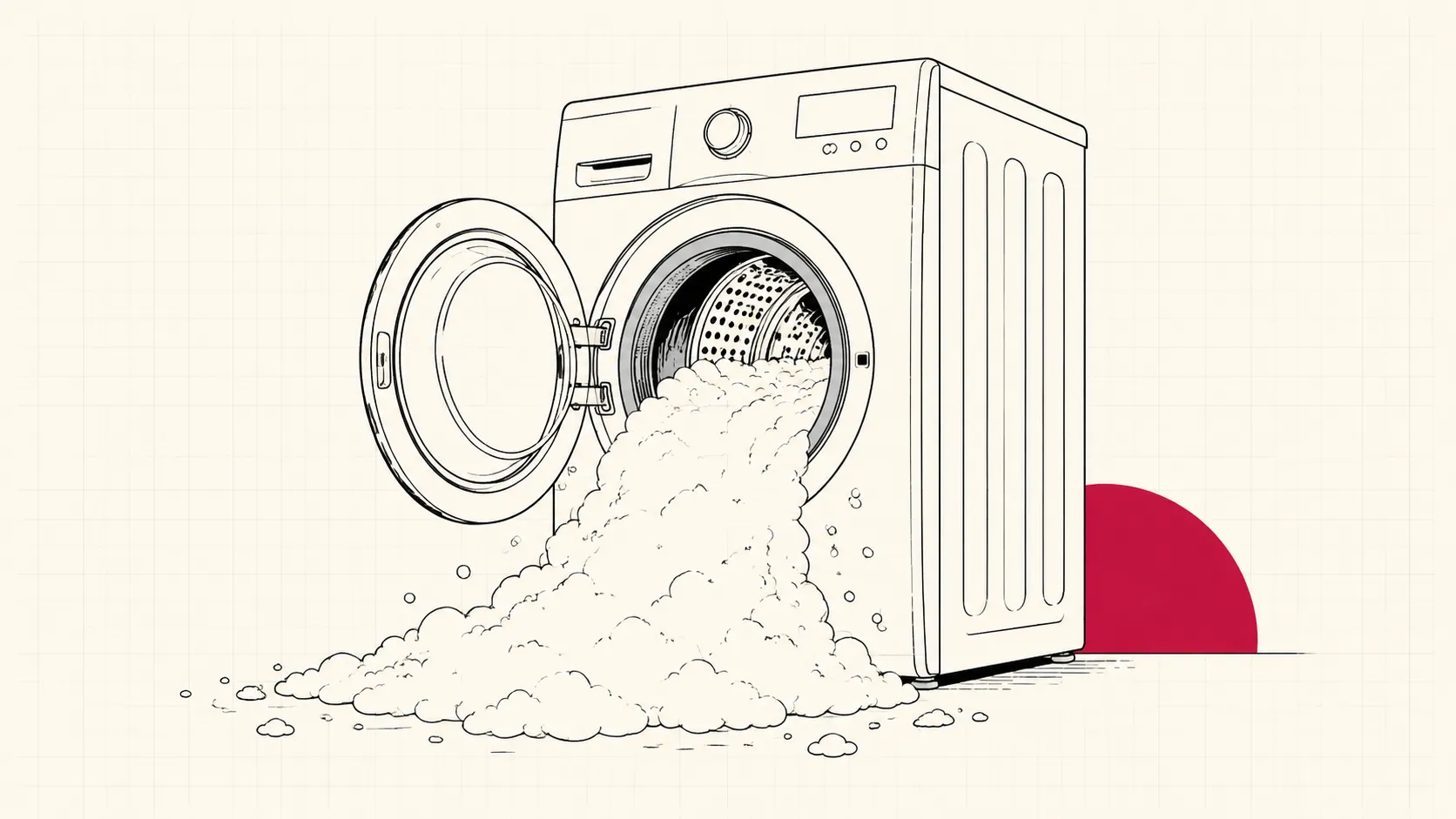
The dosing cap on a bottle of laundry detergent is a marketing instrument. It is moulded to a size that a manufacturer would like you to use per wash, which is not the same as the amount required to clean clothes in your water, in your machine, at your load size.
For most households in soft or moderately hard water, with a modern concentrate, that difference is roughly a factor of two.
What excess detergent actually does
It fakes an unbalanced load
Foam is a lubricant. A drum with a foam cushion lets laundry slide against the ribs instead of gripping them, so the load never settles into an even distribution. The machine ramps toward spin, sees the load shifting, aborts, refills, redistributes, and eventually gives up with UE.
People then go looking for shock absorbers. The fault was in the drawer.
It blocks the pressure sensing tube
The water-level sensor reads the tub through a thin clear tube. Detergent residue combines with limescale and gradually narrows it. Once it blocks, the sensor holds its last reading, and the machine concludes that the tub never drained, which surfaces as OE on a machine whose pump is perfectly healthy.
It keeps the seal wet
Residue is hygroscopic. A door seal with a detergent film never fully dries between cycles, and the folds at the bottom of the boot stay damp permanently. That is the entire mechanism behind the smell people blame on the machine.
It does not rinse out
Excess detergent that survives the rinse ends up in the fabric. On towels it kills absorbency: the reason a “clean” towel sometimes pushes water around instead of soaking it up. On skin-contact items it is a genuine irritant.
Roughly what changes the dose
- Soft water
- Substantially less than the cap suggests
- Hard water
- More: hardness consumes surfactant
- Half load
- Scale the dose down with it
- Lightly soiled
- Less again
- Concentrated formula
- Read the concentrate line, not the cap volume
How to find your actual dose
Do not guess at it in one step. Halve it gradually and watch.
- Start at half the dose you use now.
- Run three or four normal loads.
- Look at the results honestly: are clothes clean, do they smell neutral rather than perfumed, do towels feel absorbent?
- If everything is fine, halve it again and repeat.
- When something is genuinely not clean, go back one step. That is your dose.
Almost everyone stops one or two halvings below where they started.
Clearing what is already in there
Reducing the dose stops the problem growing; it does not remove the residue already in the machine.
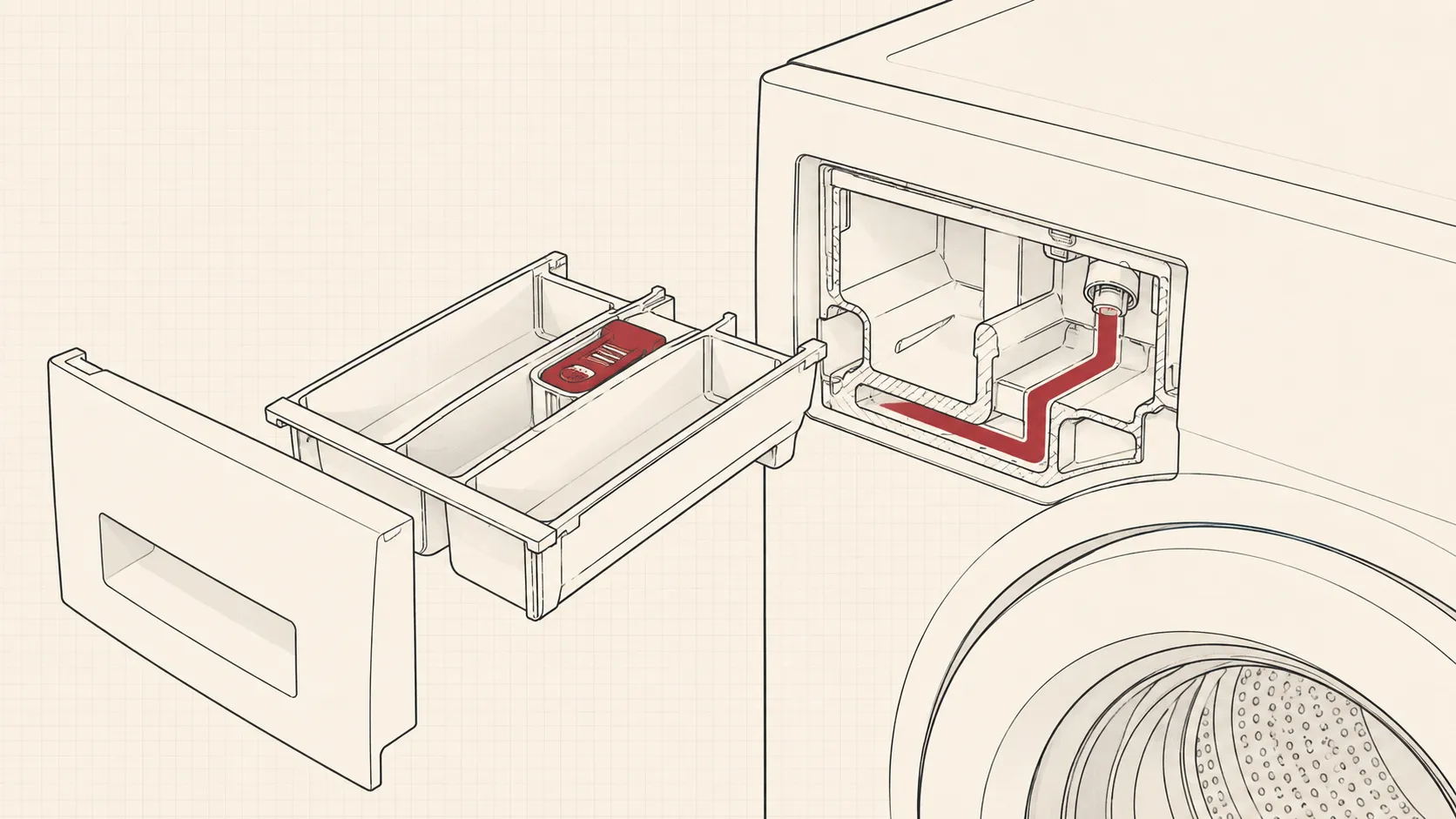
Run a Tub Clean cycle empty at 60 °C or higher, with no detergent at all. Then pull the detergent drawer right out and scrub the siphon cap under it: the gunge that collects there is what causes a drawer to overflow and to dose unpredictably. Wipe the door seal, working into the fold at the bottom. Repeat the Tub Clean monthly.
If the machine has already thrown OE from a blocked sensing tube, the tube itself needs flushing separately, cleaning the drum does not clear it.
The one exception
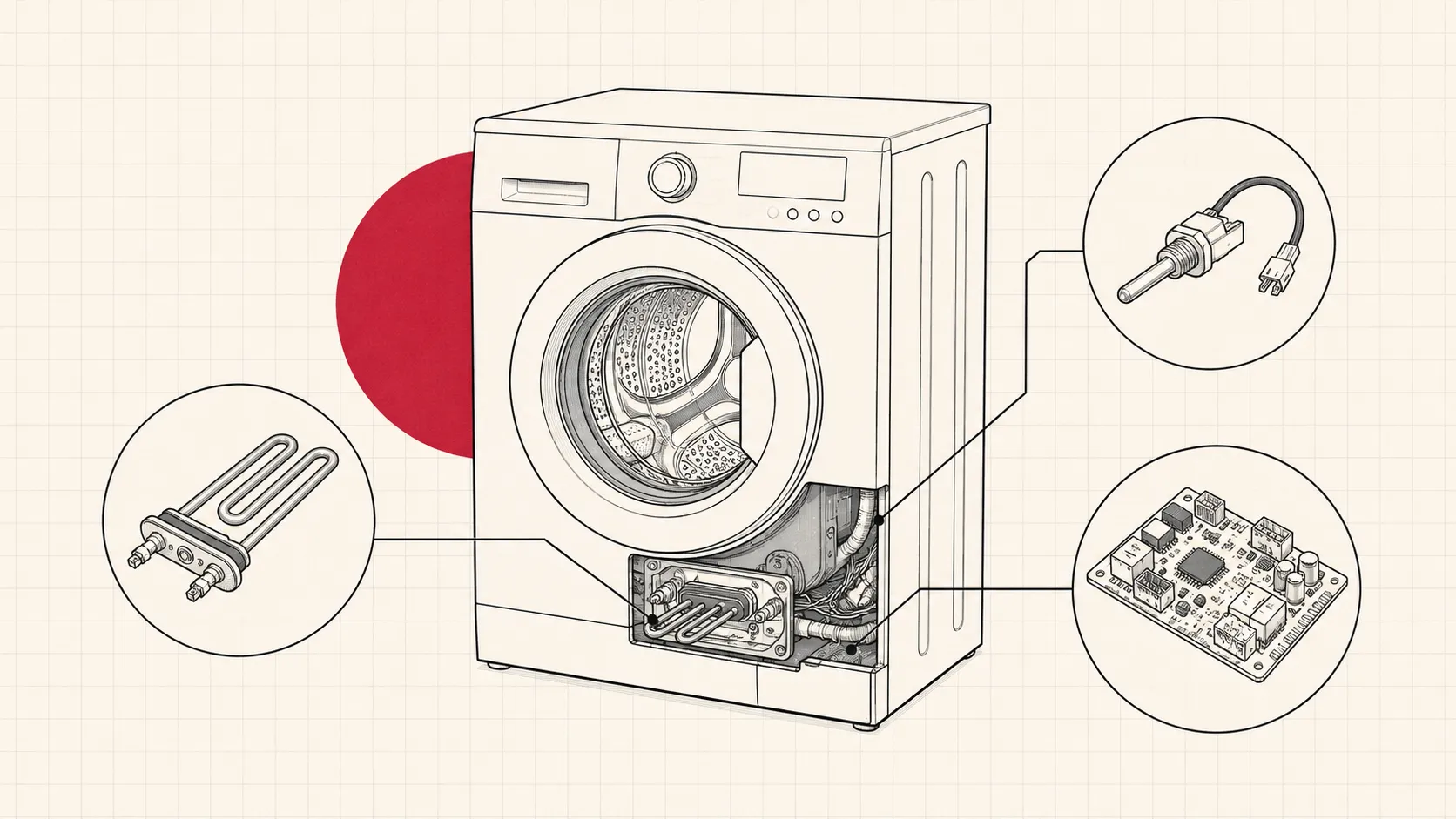
Hard water genuinely does consume detergent. In hard-water areas a portion of every dose is spent softening water rather than cleaning clothes, and cutting too far leaves grey, stiff laundry and scale on the heater.
If you are in a hard-water area, reduce more cautiously and consider a water softener or a dedicated softening additive instead of simply adding more detergent: that way the extra chemistry goes on the actual problem rather than into your towels.
REV 2026.07 · lg-washfix.com