Maintenance
The maintenance calendar that prevents most LG error codes
Roughly two thirds of the fault codes people search for are the end state of a filter nobody cleaned. Here is the whole preventive schedule on one page.
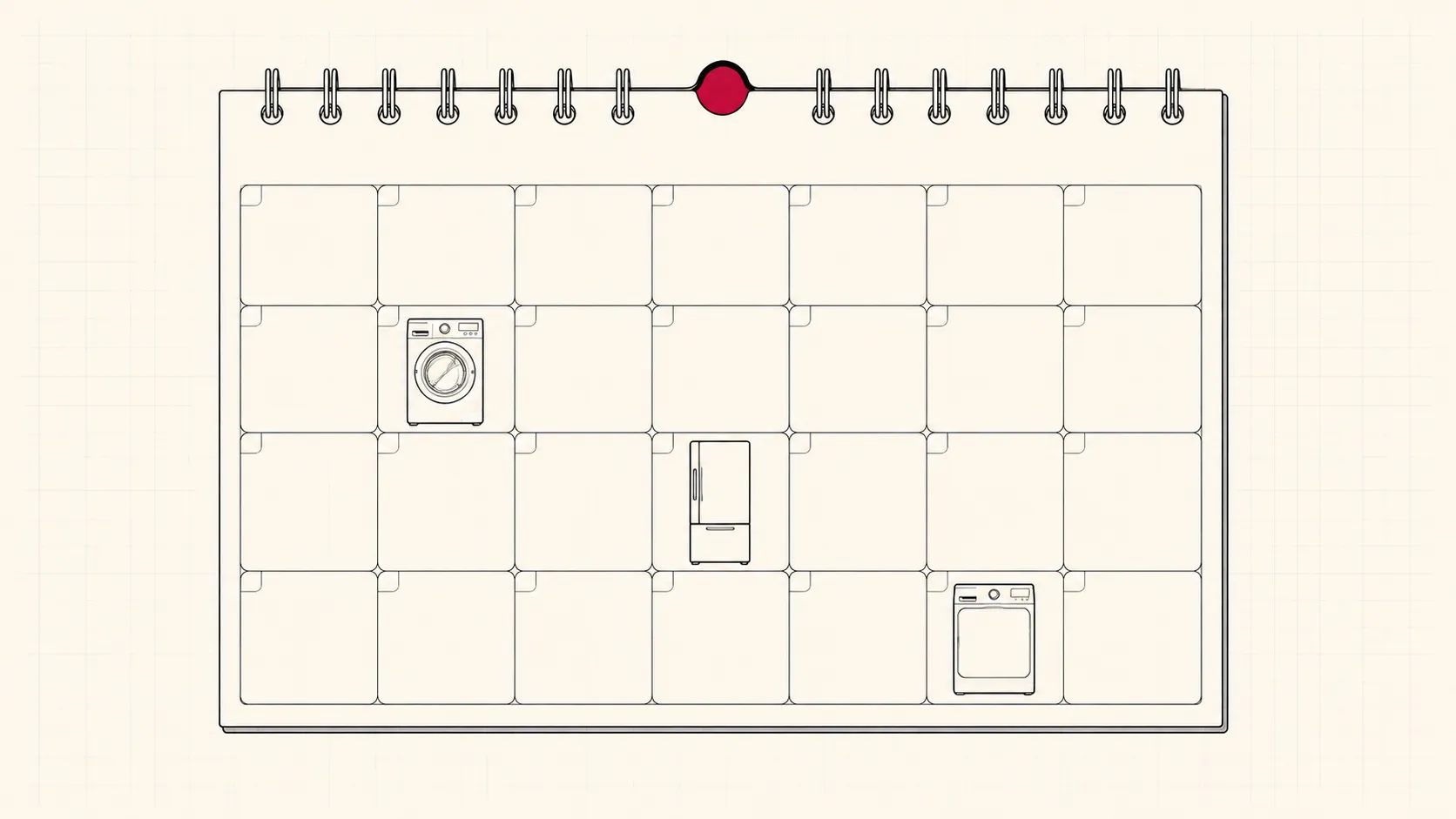
Look at the codes people search for most (OE, IE, d80, Er FF, AE), and a pattern appears immediately. Almost none of them describe a component that wore out. They describe a passage that filled up: a filter, a duct, a coil, a tube.
That means the majority of appliance faults are on a schedule you control.
Monthly
Washing machine: Tub Clean. Run the dedicated Tub Clean cycle empty at 60 °C or higher. It clears the biofilm that otherwise migrates into the pressure sensing tube and eventually causes drain and level faults. If your machine prompts tCL, that is this cycle asking to be run: it is a reminder, not a fault.
Washing machine: leave the door ajar. A sealed damp drum grows exactly what you would expect in the door seal.
Heat-pump dryer: condenser filter. Behind the lower access flap. Rinse until the fins are visibly clear and let it dry fully before refitting. Monthly is not excessive on these; owners routinely leave it a year and then wonder why drying takes three hours.
Dishwasher: filter stack. Lift it out, rinse it, and check the sump underneath while it is out.
Quarterly
Washing machine: drain pump filter. Behind the flap at the bottom-right of the front panel. Drain through the emergency tube first. This single job prevents most OE faults outright.
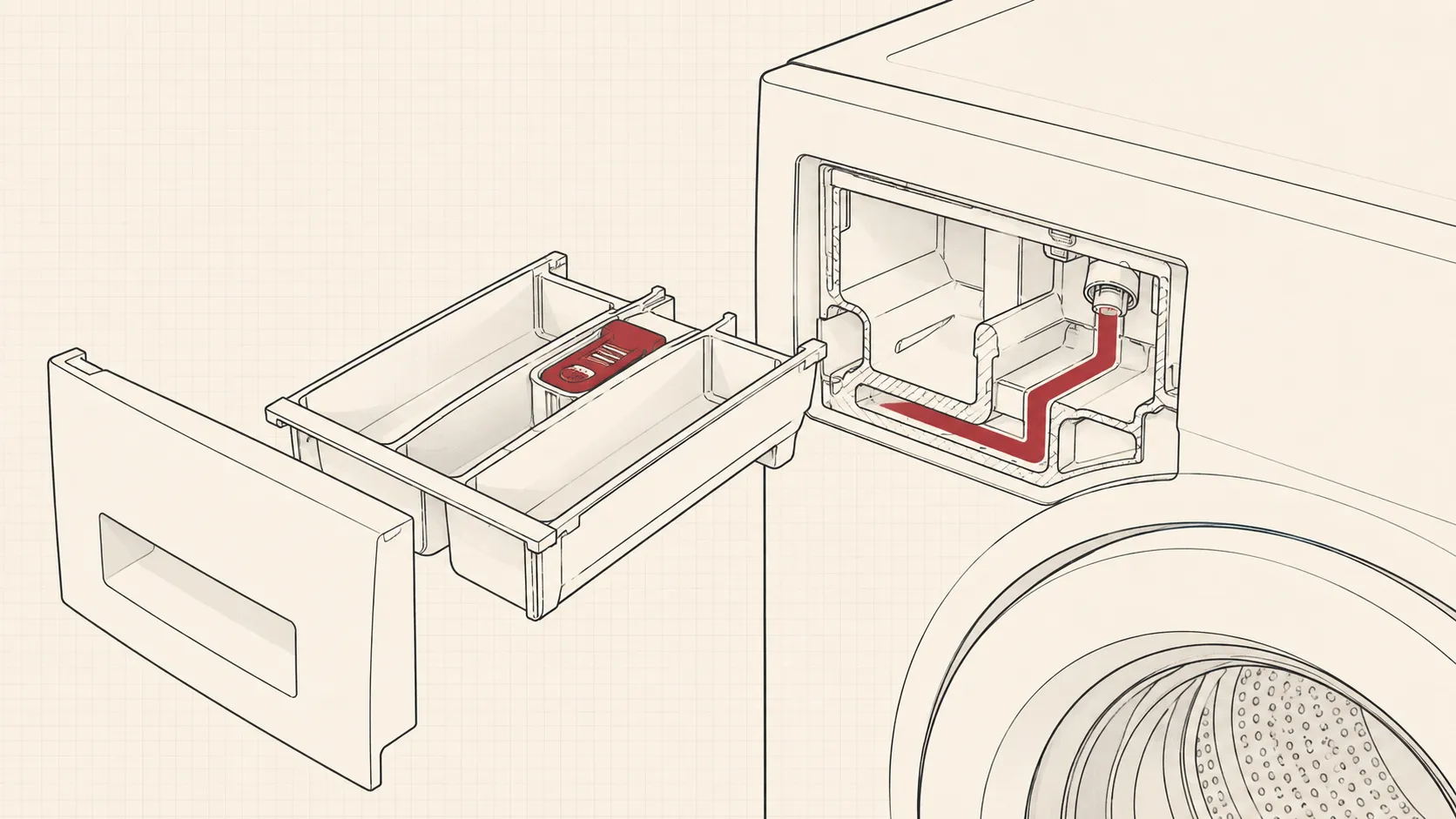
Washing machine: detergent drawer. Pull it right out and scrub the siphon cap. A blocked siphon causes overflow and false dosing.
Dryer: lint screen deep clean. Not the per-load lint removal, but scrubbing the mesh itself with warm soapy water until water runs straight through rather than beading on it. Fabric-softener residue glazes the screen invisibly.
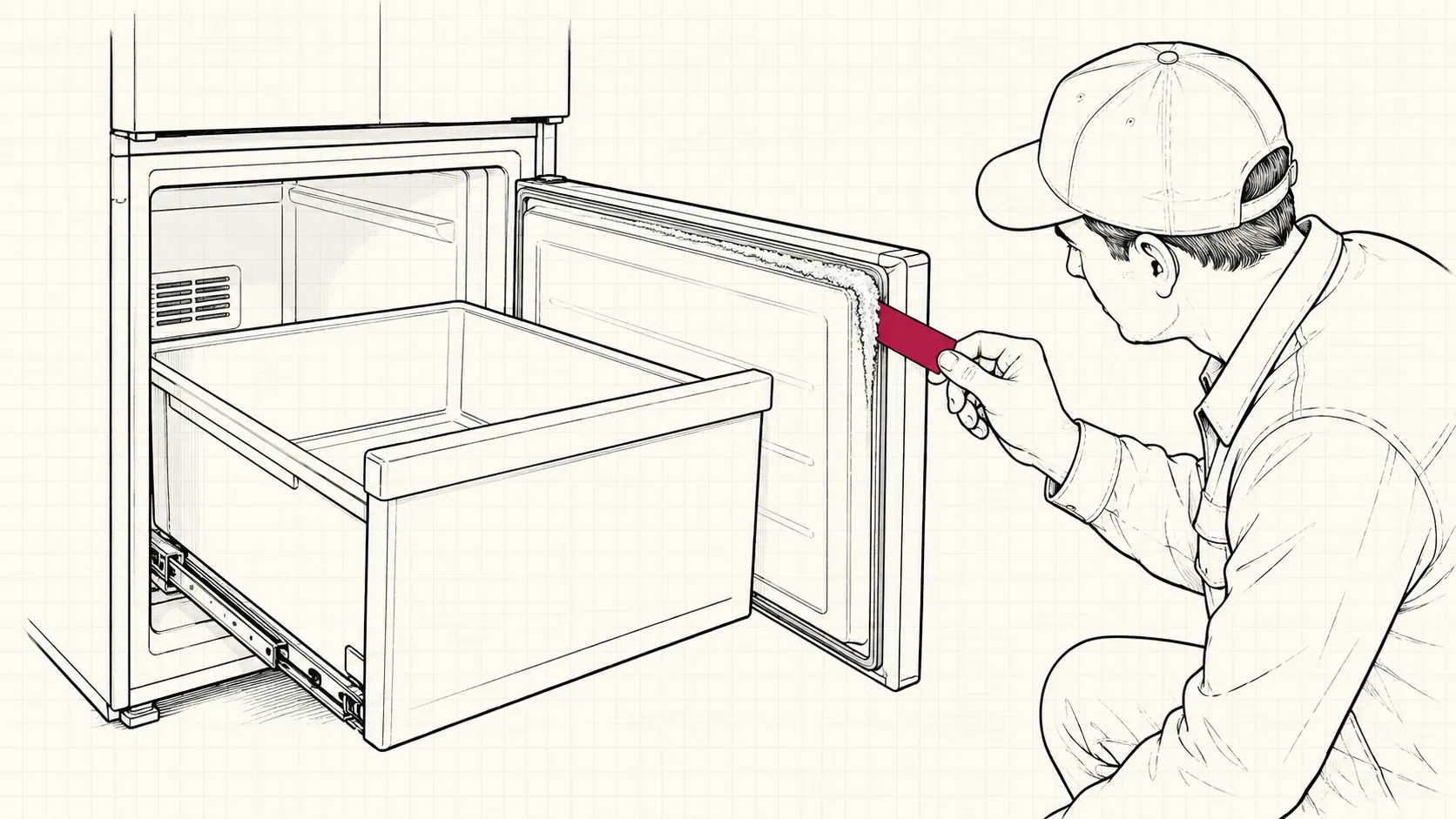
Refrigerator: door seals. Wipe them, and check them with a banknote: close the door on it and pull. It should drag. Where it slides out freely, the seal is not sealing, and the compartment is fighting a slow air leak that eventually shows up as a defrost problem.
Twice a year
Refrigerator: condenser coil. Underneath or at the rear depending on model. Vacuum the dust mat off it. A blanketed condenser makes the compressor run long and hot, and it is the direct cause of most Er CF codes.
Dryer: full duct run. Brush the whole run from the machine to the exterior hood, and check that the hood flap opens and closes freely. This is the job that prevents d80, d90 and d95 from ever appearing.
Air conditioner: indoor filters. Wash the mesh filters, and while the grille is open check that the condensate line drains freely. Blocked condensate is the usual cause of CH04.
Annually
Washing machine: inlet screens. In the hose couplings at the machine and at the tap. This prevents IE.
Air conditioner: outdoor terminal block. Isolate at the breaker, remove the service cover, and check every terminal screw for tightness. Loose or corroded interconnect terminals are the leading cause of CH05: the code that looks like an expensive board fault and usually is not.
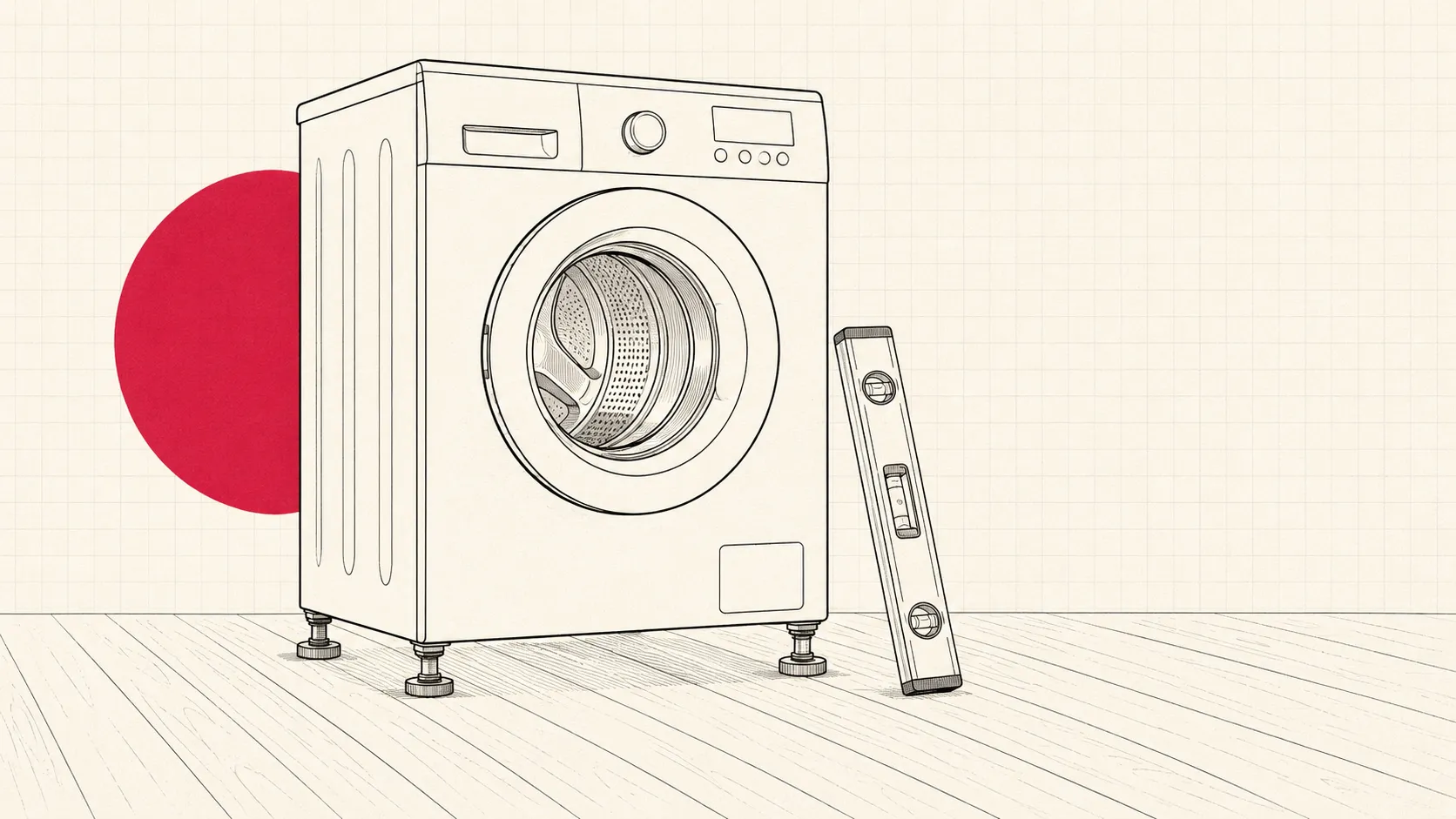
Everything: check the levelling. Appliances walk. Push each corner and confirm no rock.
The habits that matter more than the schedule
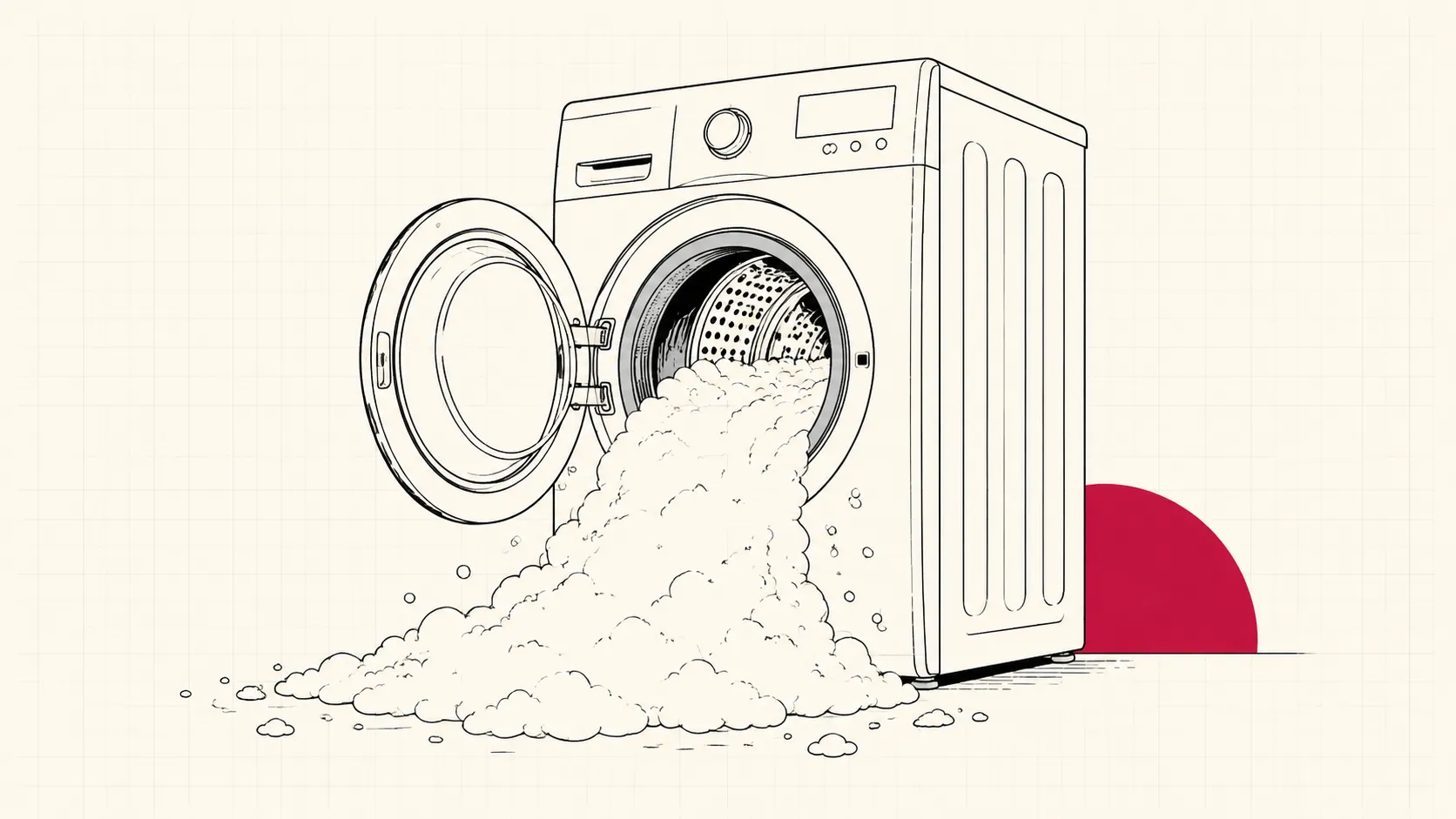
Dose detergent properly. Overdosing causes foam, foam causes false imbalance readings, and residue causes exactly the blockages listed above. Modern concentrates need far less than the cap suggests, and soft water needs less again.
Do not overload. Load bulk is fine; load mass is what damages bearings and triggers imbalance.
Never push an appliance back without looking behind it. Crushed drain hoses and crushed dryer ducts between them account for an enormous share of first-time faults.
Photograph the rating plate once. Every future parts order starts there.
What this schedule does not prevent
Bearings, compressors, control boards and motors fail on their own timeline. Maintenance extends that timeline (a condenser kept clean genuinely does extend compressor life), but it does not make an appliance permanent.
The point is narrower and more useful than that: it removes the failures that were never really failures, so that when something does break, you know it actually broke.
REV 2026.07 · lg-washfix.com