Guide/Washing machines
LG Washer Not Heating Water: Heater, Sensor, and Control Checks
A measured guide to LG washer temperature problems, including heater resistance, thermistor readings, wiring checks, and repair limits
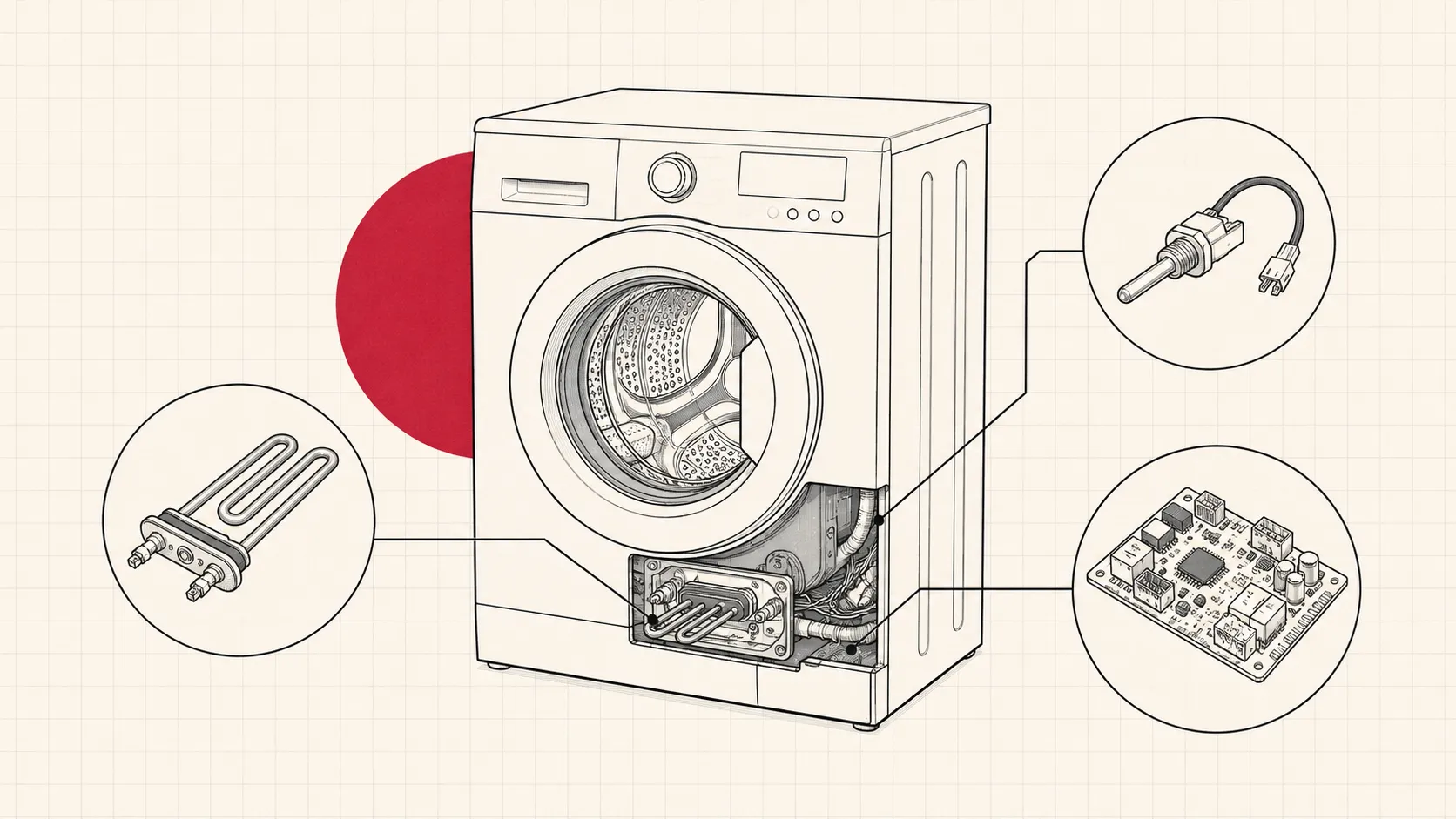
Confirm the symptom before opening the machine
Start with the actual wash temperature. An LG washer that feels cold at the end of a cycle is not automatically defective. Many cycles use mostly cold water, and the door glass may stay cool even during normal operation.
Use a controlled test cycle. Select a warm or hot wash option, allow the machine to fill, and wait 10 to 15 minutes. The water should begin warming if the selected cycle calls for heat. On many front load models, the control does not energize the heater immediately after filling.
Check the installation first. A washer connected only to a cold water supply cannot produce a true hot wash on models that rely on incoming hot water. Verify that the hot supply tap is open and that the inlet hose is connected correctly.
Check the heating element resistance
The heater is the first electrical component to measure. LG front load washers commonly use a tub heater mounted through the rear or lower tub area. Access depends on the model, but the measurement method is similar.
Disconnect power before testing. Remove the washer plug, then disconnect the heater terminals. Measure resistance directly across the heater pins with a multimeter set to ohms.
Expect a typical reading around 10 to 30 ohms. The exact value varies by heater design, but a reading near infinite resistance indicates an open heater. A reading close to 0 ohms indicates a shorted component. Either condition requires heater replacement.
Check for leakage to ground. A heater can show a normal resistance value and still trip protection because insulation has failed. Measure from each heater terminal to the metal heater body. A normal reading should show no continuity.
Test the temperature sensor
The thermistor tells the control board how hot the water is. LG washers usually use a negative temperature coefficient sensor, meaning resistance decreases as temperature rises.
Measure the sensor at room temperature. A common LG washer thermistor reading is roughly 40,000 ohms at 25 degrees Celsius, but the exact specification depends on the model. A reading that is extremely low or extremely high compared with the service data suggests a faulty sensor.
Compare resistance changes with temperature. Warm the sensor carefully while measuring. The resistance should change smoothly. A value that jumps suddenly or does not react indicates a sensor problem rather than a heating problem.
Inspect wiring and connectors
Do not replace a heater before checking the harness. The heater circuit carries significant current, and loose terminals can create heat damage.
Look for common failure points. Inspect the heater connector, thermistor plug, and sections of harness near the tub where vibration can rub against insulation. Burn marks, melted plastic, or loose terminals are repair findings, not cosmetic issues.
Check continuity with power removed. A wire should have very low resistance from one end to the other. Any open reading means the harness cannot deliver power to the component.
Verify the control board output
The control board supplies power to the heater through a relay or switching circuit. If the heater and sensor test correctly, the board becomes the next suspect.
Confirm the command before condemning the board. During a heating cycle, a technician can check whether voltage reaches the heater terminals. This is a live voltage test and should only be performed with proper tools and training.
Do not bypass safety checks. A washer that overheats, leaks current, or shows damaged wiring should not be forced into operation by jumping components.
When to repair and when to stop
Replace the failed part, not the whole heating system. A bad heater, thermistor, or damaged connector is usually a targeted repair. Replacing multiple parts without measurements often creates unnecessary cost.
Stop and call a technician for difficult access or electrical faults. If the heater area cannot be reached safely, if the breaker trips during testing, or if the control board shows burn damage, professional diagnosis is the correct next step.
Use measurements to guide the repair. A temperature problem is usually solved by confirming the heat source, the sensor feedback, and the wiring path in that order. The goal is not to guess the failed part, but to prove which section of the circuit has stopped working.
REV 2026.07 · lg-washfix.com