Guide/Washing machines
How to read an LG model number (and why it matters before you buy a part)
The string on the door frame is not a serial number: it encodes capacity, platform and market. Reading it correctly is the difference between a part that fits and a part you cannot return.
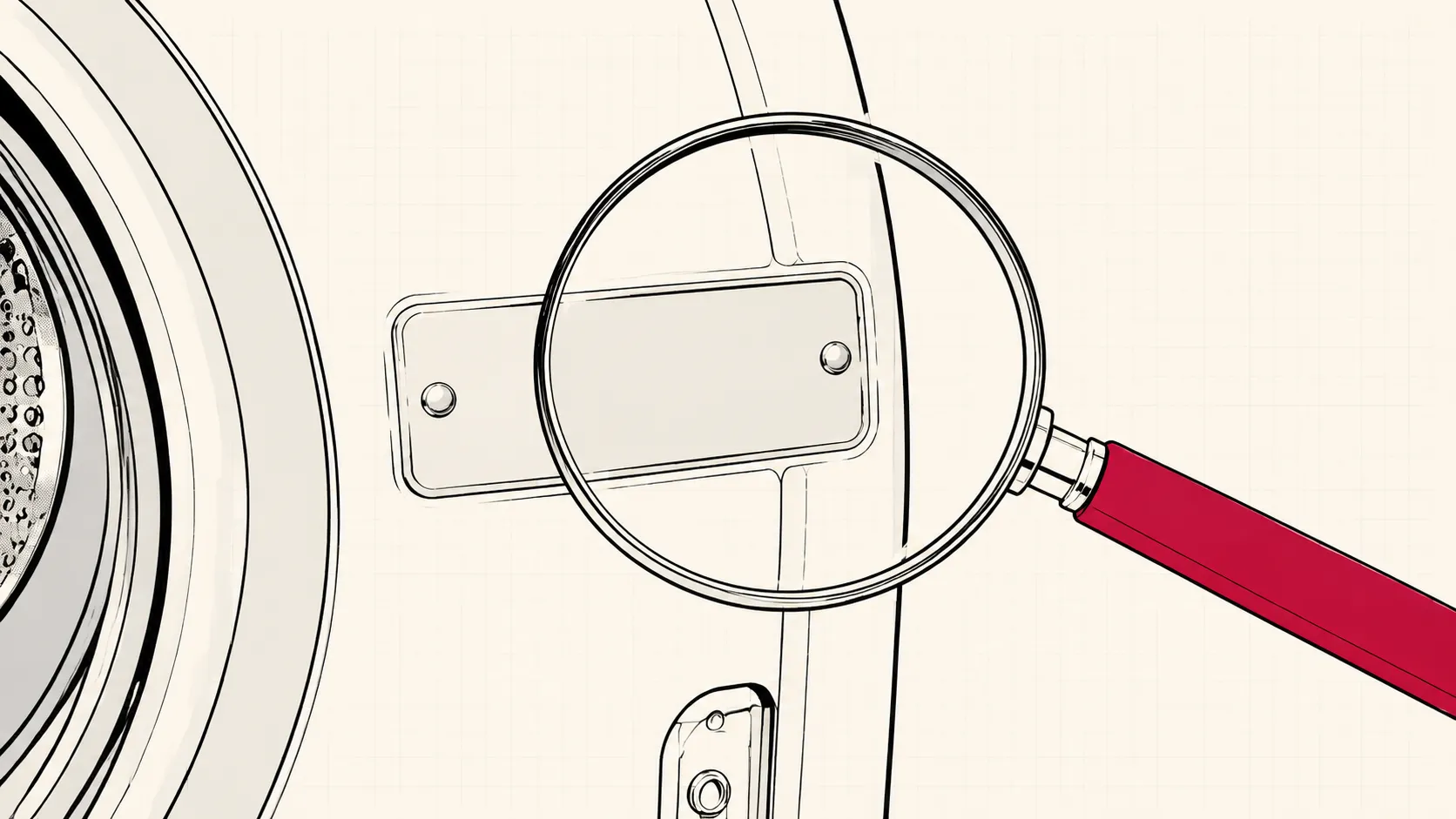
Every repair conversation that goes wrong starts the same way: “it’s an LG washing machine, the front-loading one.” There are hundreds of those, they span three drive platforms and about fifteen years, and their parts are not interchangeable.
The model number solves this, but only if you find the right string, and only if you understand that what you can read from it has limits.
Where the number actually is
It is never on the front of the machine, and the number moulded into the plastic is usually a platform code rather than the model.
- Washers and dryers: on the door frame or the door jamb, visible only with the door open. Also on the rear panel.
- Refrigerators: inside the fresh-food compartment, on the left-hand wall near the crisper drawer, or on the ceiling of the compartment.
- Dishwashers: on the top edge of the door, visible only when the door is open.
- Air conditioners: on the right-hand side panel of the indoor unit, often behind the front grille, and on the outdoor unit’s data plate.
- Ovens and ranges: behind the storage drawer, or on the frame revealed when the door is open.
What the string tells you
A typical European LG washer model looks like F4V709WTSE. A US one looks like WM4000HWA. They follow different conventions, which is the first trap.
European washer pattern (illustrative)
- F
- Front-loading washing machine
- 4
- Series / feature tier
- V
- Platform generation
- 7
- Capacity indicator
- 09
- Spin speed group
- W
- Colour: W = white
- TSE
- Market and feature suffix
The broad shape holds across LG’s ranges: a letter for the product type, digits for tier and capacity, then a suffix that encodes colour and destination market.
Why the suffix matters more than people think
Two machines that look identical on a shop floor, with model numbers differing only in the last two or three characters, can have:
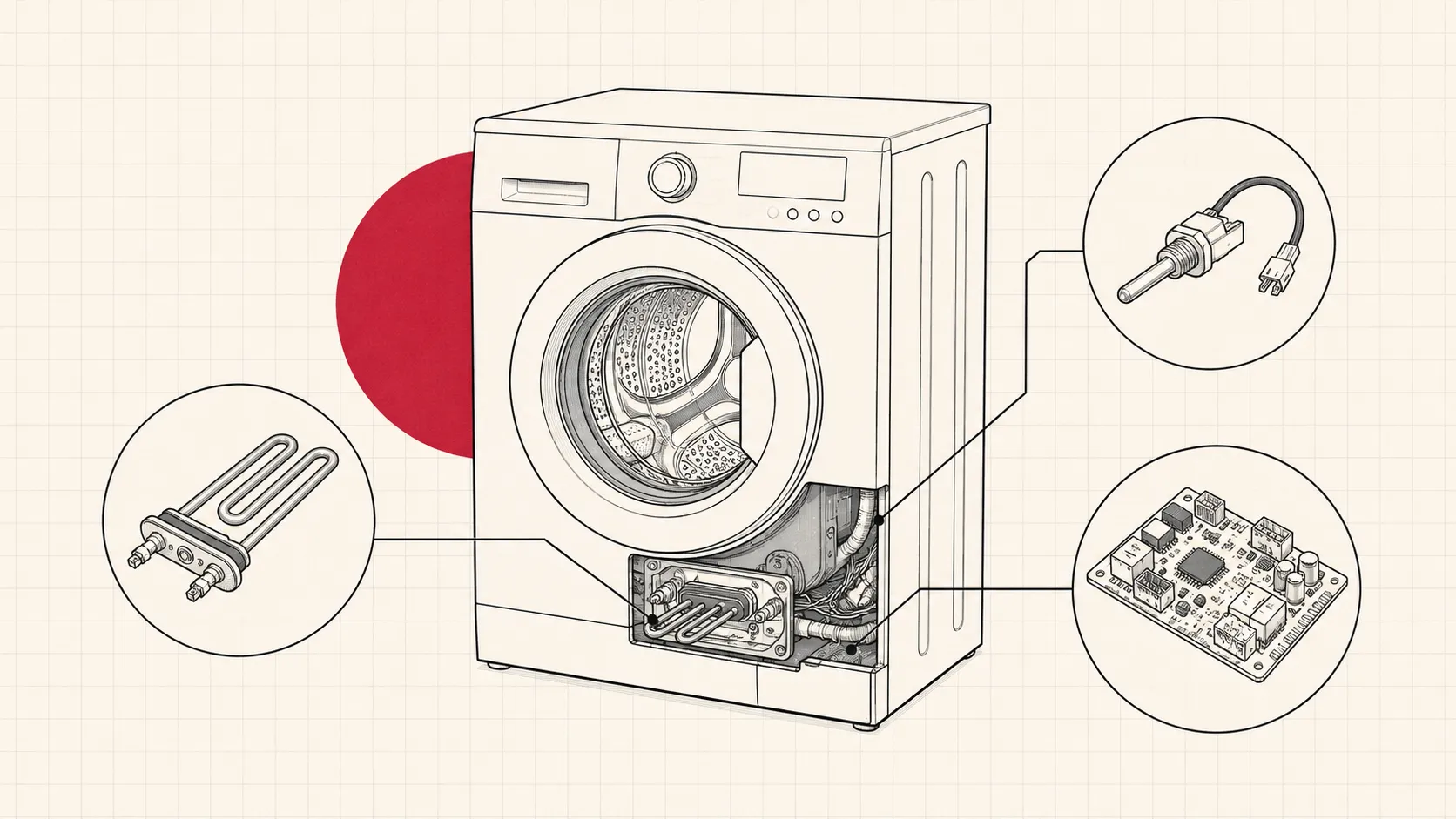
- Different control boards with different firmware.
- Different door locks: the same shape, different connector pinout.
- Different heater ratings for different supply voltages.
- Different drain pumps: same mounting, different flow rate.
That last group is the expensive one, because the part physically fits. It goes in, it screws down, the machine runs, and it under-performs just enough to throw a drain code six weeks later.
Getting from a model number to the right part
- Find the full model number including every suffix character.
- Find the serial number too. Suppliers use it to resolve mid-production changes.
- Search the exploded parts diagram for your model rather than searching the part name. The diagram gives you the manufacturer’s part number.
- Cross-check the part number on the old component before ordering. Most LG parts carry their number moulded or printed on them.
- Compare connectors, not just shapes. Count the pins and note the keying.
The regional trap
LG sells the same underlying machine under different model numbers in different markets, and the parts catalogues are regional. A US WM model and its European F equivalent may share a drum and a motor while using entirely different control boards and different mains voltages.
If you are buying from an international seller, confirm the part number matches the one on your old part, not that the machine “looks like” the one in the listing photograph.
The short version
Photograph the whole rating plate the first time you ever open the appliance, and keep the picture. Every future repair, warranty conversation and parts order starts from that image, and hunting for a label with a torch while holding a dripping drain pump is a worse way to spend an afternoon.
REV 2026.07 · lg-washfix.com