Buying
Repair or replace: a decision rule that is not just "half the price"
The 50% rule is too blunt for appliances. Judge it on which component failed, what else is near end of life, and whether the failure was a symptom of something you have now fixed.
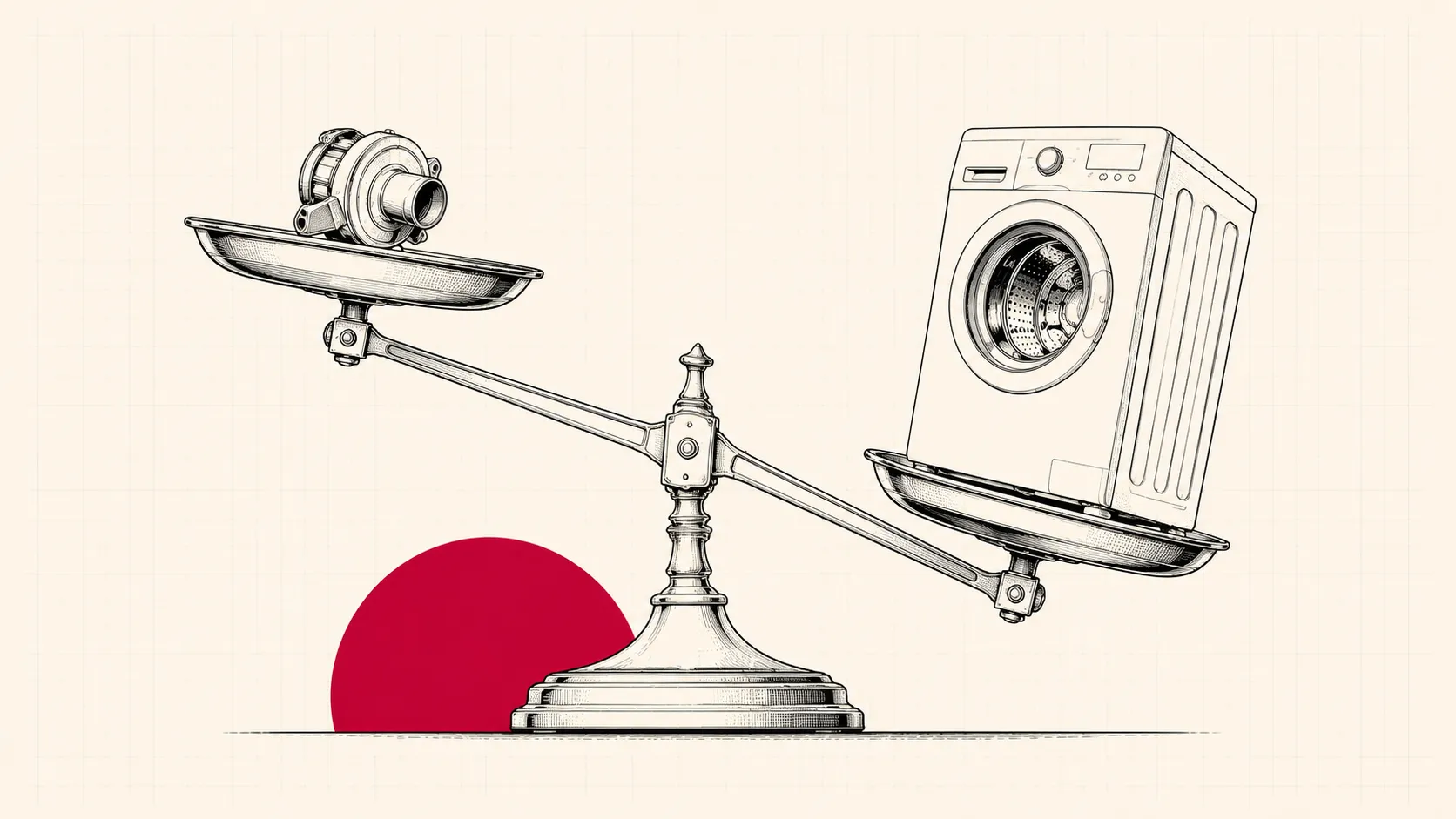
The rule everyone repeats is that you should replace an appliance when the repair costs more than half the price of a new one. It is a reasonable starting point and a poor finishing point, because it ignores the two things that actually predict what happens next: which component failed, and what else in the machine is the same age.
Component class matters more than component cost
Appliance parts fall into three groups, and they behave very differently after replacement.
Consumables. Filters, seals, hoses, lint screens, inlet screens, drain pumps. Cheap, expected to be replaced during a normal life, and replacing one tells you nothing about the rest of the machine. Always worth doing.
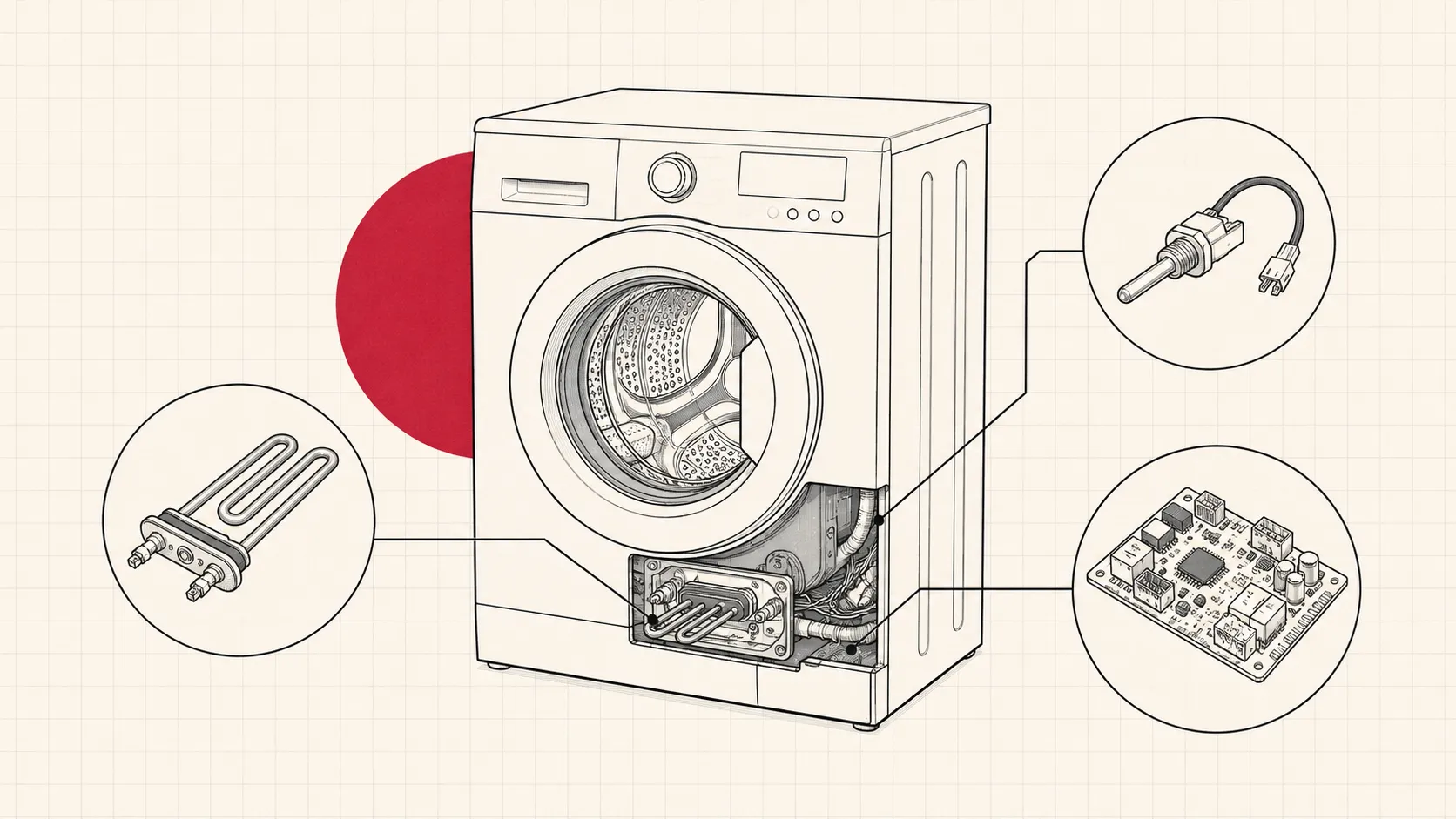
Wear items. Shock absorbers, door locks, hinges, fan motors, heaters, igniters. Mid-cost, they wear on a predictable curve, and one failing suggests its siblings are on the same curve. Worth doing, but note the machine’s age.
Structural and control. Drum bearings, sealed tubs, compressors, sealed refrigerant circuits, main control boards. Expensive, and their failure often indicates the machine has reached the end of its designed life rather than suffered an incident.
Rough decision weighting
- Consumable failed
- Repair, at almost any age
- Wear item, machine under ~7 years
- Repair
- Wear item, machine over ~10 years
- Repair only if cheap
- Structural, machine under ~5 years
- Repair: investigate the cause
- Structural, machine over ~8 years
- Usually replace
The question the 50% rule forgets
Was the failure caused by something you have now fixed?
A drain pump that seized on a bra wire is a machine that is fine. A drain pump that seized because it has been running against a partially blocked line for two years is a machine with an installation problem you should also fix, otherwise the new pump is on the same trajectory.
A defrost heater that failed is a repair. A defrost heater that failed because the condenser has never been vacuumed is a repair plus a maintenance change, and without the second part you will be back.
The same logic works in your favour: if you can identify a specific external cause, the repaired machine is genuinely as good as it was. If you cannot, you are repairing a machine that is aging normally, and the next failure is closer than the last one.
What “same age” means in practice
Appliances do not fail one component at a time so much as they enter a phase. Rubber goes brittle across the machine at roughly the same rate. Bearings, seals and pumps have all done the same number of cycles.
So the useful question is not “is this repair worth it” but “if I spend this, how long until the next spend?” A £120 repair on an eight-year-old machine that then needs £200 of bearings within a year was not a £120 repair.
Where repair almost always wins
- Any consumable or filter-related fault, at any age.
- Anything caused by installation: crushed hoses, bad levelling, blocked ducts. The machine is fine; the situation was wrong.
- Cosmetic and control-panel faults that do not affect function.
- Machines under five years old, where the drivetrain and cabinet still have most of their life left.
Where replacement usually wins
- Sealed refrigerant faults on older refrigerators. Licensed work, high cost, and the rest of the appliance is the same age.
- Bearings on an older sealed-tub front-loader, where the practical part is a whole tub assembly.
- Control boards on obsolete platforms, where the part is discontinued and refurbished boards are the only option.
- Anything where the parts are no longer made. This ends the conversation regardless of the economics.
The thing worth adding to the maths
Efficiency has improved enough that a fifteen-year-old machine costs meaningfully more to run than a new one, and that gap belongs in the calculation for appliances that run constantly, refrigerators above all, since they never switch off.
But it is a smaller number than replacement marketing suggests, and it does not include the environmental cost of manufacturing a replacement. For a machine that is otherwise sound, “repair it and run it another five years” is usually both the cheaper and the more defensible answer.
REV 2026.07 · lg-washfix.com